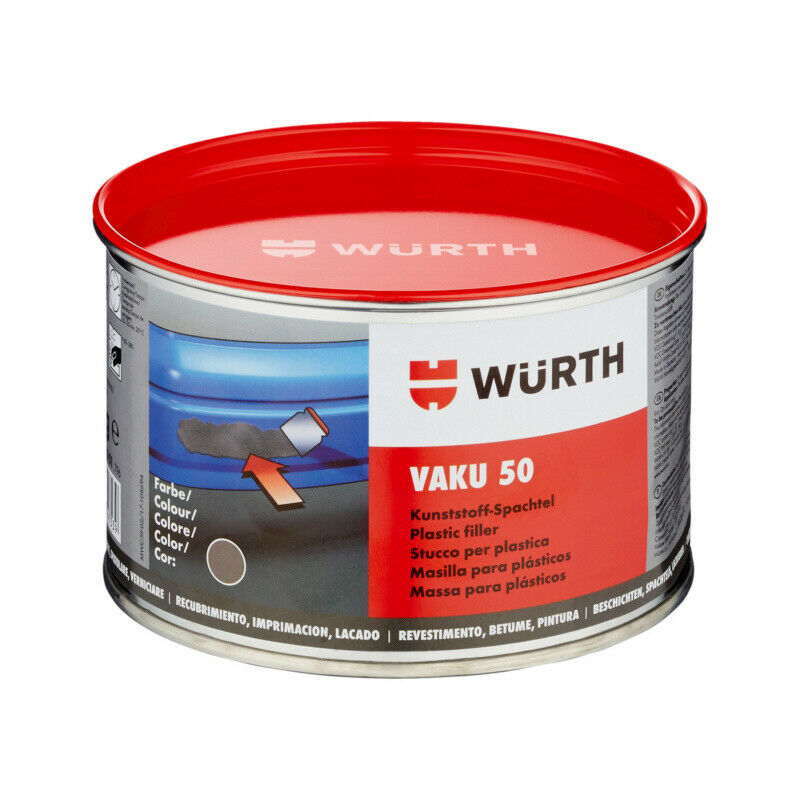
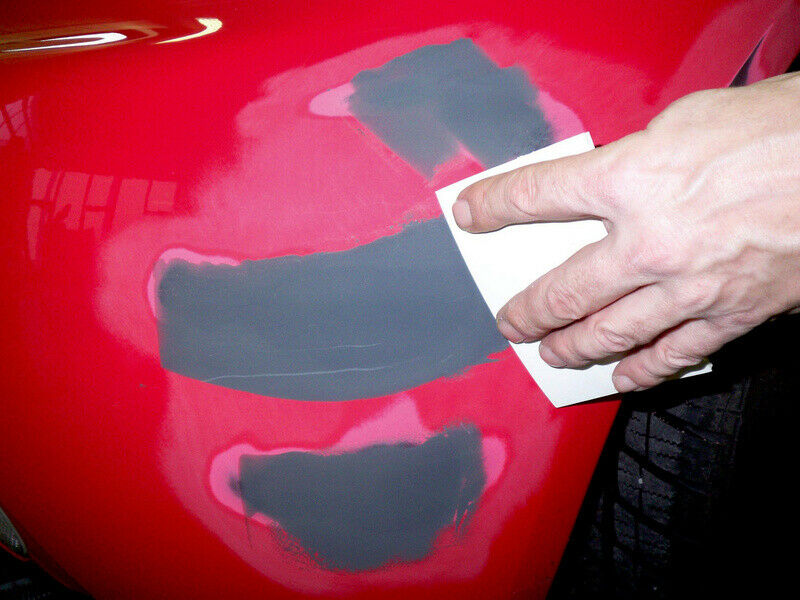
WURTH Plastic Bumper Bar Filling Finishing Repair Filler 970g
$79.95
Out of stock

Specification
Elastic contour filler, specifically for use on paintable plastic parts
High degree of elasticity
Ideal for modelling and touching up contours
Excellent adhesion
Short drying time
Saves time as further processing can continue directly
Easy to sand
User friendly
Can also be used on other material substrates
Multifunctional
Maximum permissible VOC content of VAKU 50: 250 g/l of product category 2(b). Max. VOC content in accordance with German Ordinance on Solvent-Based Paints and Lacquers (ChemVOC FarbV): 3 g/l.
Heat-resistant up to 80°C
Notice
Tip: Preliminary tests are recommended due to the broad range of mixed plastics! Pre-treatment with a 1-component plastic primer is advisable to ensure optimum adhesion.
Not suitable for repairing breakage points.
To prevent possible complaints, always ensure the correct dosing ratio between the filler and hardener.
The usage instructions are recommendations based on the tests we have conducted and our experience; carry out your own tests before each application. Due to the large number of applications and storage and processing conditions, we do not assume any liability for a specific application result. Insofar as our free customer service provides technical information or acts as an advisory service, no responsibility is assumed by this service except where the advice or information given falls within the scope of our specified, contractually agreed service or the advisor was acting deliberately. We guarantee consistent quality of our products. We reserve the right to make technical changes and further develop products.
APPLICATION
Application area
Auto/cargo:
In vehicle manufacturing and for repairing vehicles. Elastic filler for repairing scratches, indents and contours (e.g. contact damage on bumpers) on paintable plastic parts.
Metal:
Elastic filler for repairing scratches, recesses and contours on paintable plastic parts.
Instructions
The surface must be clean, dry and free from grease. Sand surfaces Wherever possible, only sand polyester material when dry due to its sensitivity to water. See separate information on wet sanding.
Brand
WURTH