

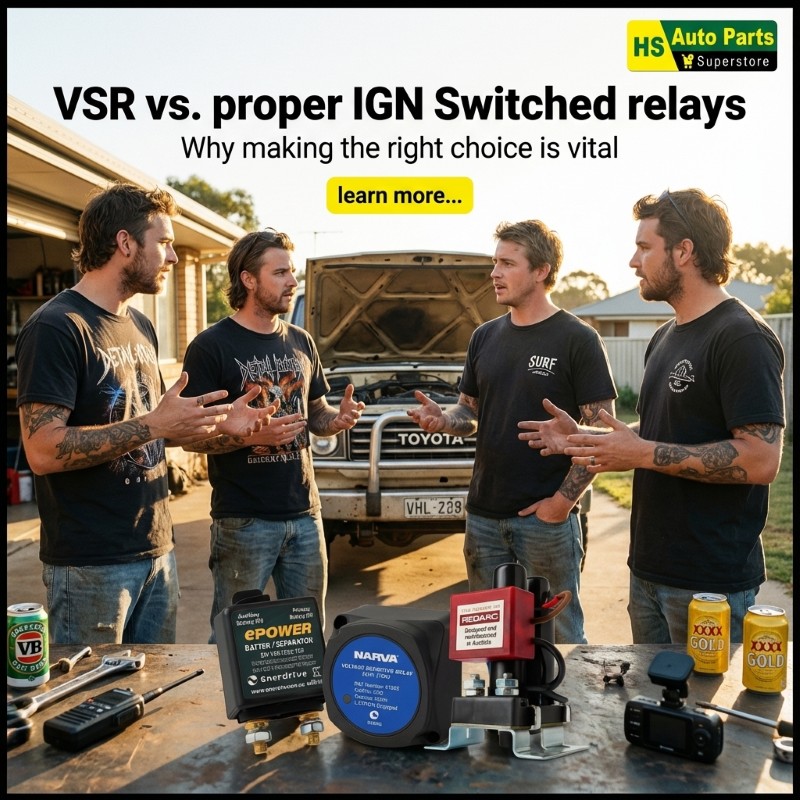
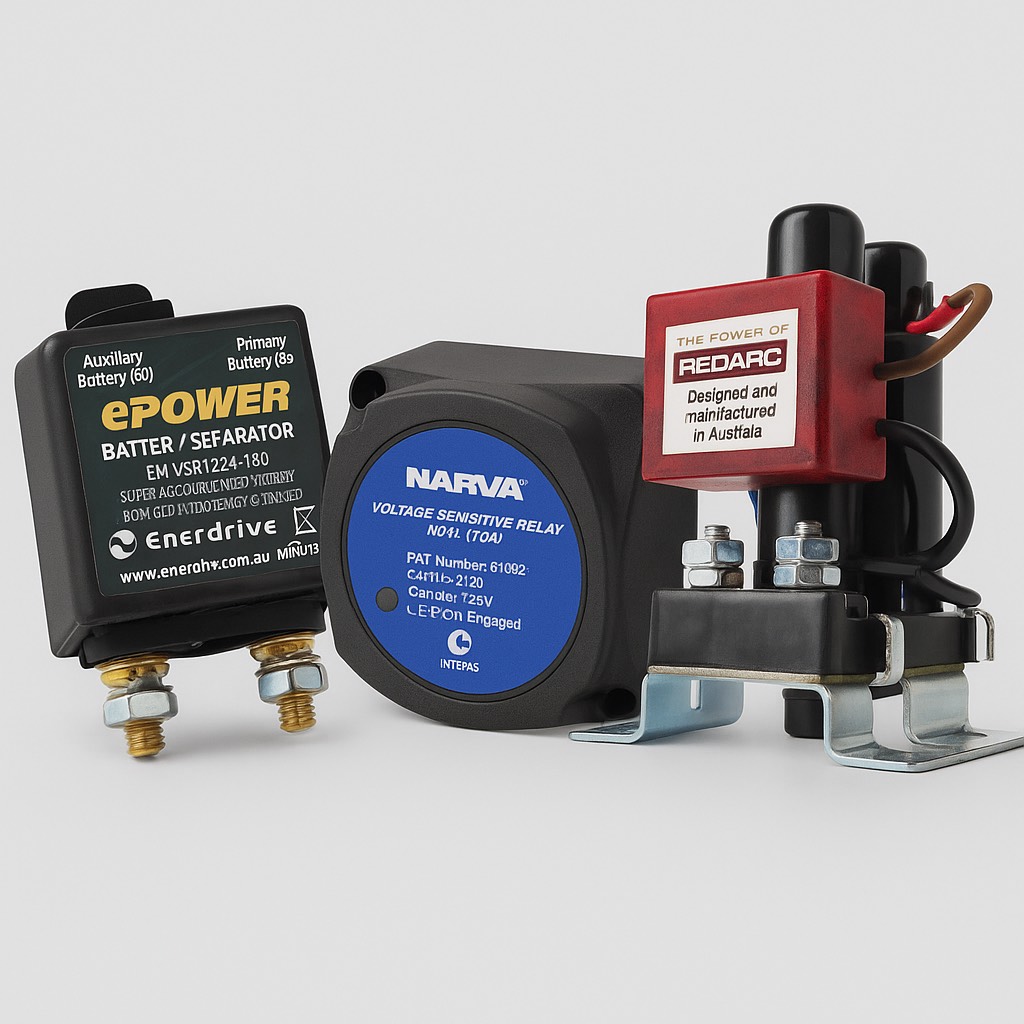
When you’re wiring up accessories—things like fridges, lights, or second batteries—how you trigger the relay that feeds them can make a big difference.
A Voltage Sensitive Relay (VSR) works by monitoring the system voltage. Once the alternator charges the battery above a certain level (typically around 13.2–13.4V), the VSR closes and sends power through. When the voltage drops back down below a threshold (often 12.8V or less), the VSR opens and cuts the feed.
 Great for setups where you don’t want to run an ignition wire, or when you’re adding dual batteries and want an automatic isolator.
But there’s a catch: VSRs only react to voltage, not whether the ignition is actually on. That means in some vehicles—especially with smart alternators or stop-start systems—they can behave inconsistently. Accessories might stay powered longer than you expect, or cut off too early.
That’s where a True Ignition-Switched Relay shines. Instead of relying on voltage fluctuations, it takes a clean ignition trigger (a proper IGN feed) and switches accessories strictly with the key. When the ignition is on, your accessories are live. When the ignition is off, they’re dead—no guessing, no lag, no drain.
Ideal for powering things like UHF radios, dash cams, or anything that absolutely must follow the key position.
Which one should you use?
Use a VSR if you’re isolating dual batteries or want automatic cut-in/out without touching the ignition system.
Use a True IGN-Switched Relay if you want reliability, consistency, and guaranteed shutoff with the key.


